How to visit Valley of the Kings

The Valley of the Kings is Luxor's royal necropolis, best known for its painted pharaonic tombs cut deep into the desert cliffs. A visit here is shorter than many travelers expect, but it feels more intense: there is heat above ground, silence inside the tombs, and a lot rides on choosing the right chambers. The biggest difference between a rushed visit and a memorable one is arriving early and knowing which tombs deserve your three included entries. This guide covers timing, tickets, transport, and on-site flow.

Quick overview: Valley of the Kings at a glance

If you want the smoothest visit, make your decisions before you reach the visitor center.

  • When to visit: Daily, with the most useful arrival window at the 6am opening; 6am–8:30am is noticeably calmer than late morning, because big Luxor and Red Sea tour groups typically start reaching the valley after that.
  • Getting in: From EGP 600 for standard entry covering 3 standard tombs, with premium add-ons from EGP 180 for special chambers. Booking ahead matters most in winter and for early slots, while summer is easier if you can handle the heat.
  • How long to allow: 2–3 hours works for most visitors. Add time if you want a premium tomb, a slower pace through wall paintings, or a same-morning West Bank pairing.
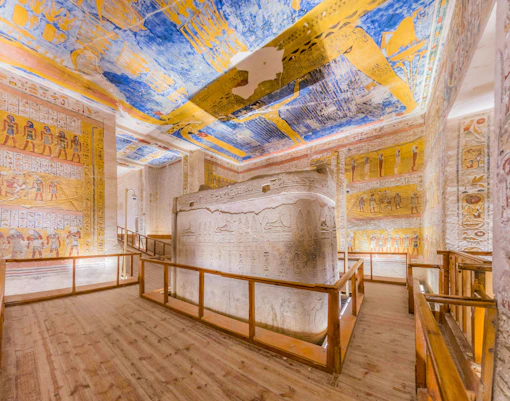
  • What most people miss: Ramesses IV's astronomical ceiling, the side chambers in Ramesses III, and the fact that the open-tomb roster changes daily.
  • Is a guide worth it? Yes for a first visit, because guides explain the symbolism and tomb choices outside before you enter; if you already know what you want to see, independent entry works well.

🎟️ Morning slots for Valley of the Kings sell out several days in advance during winter. Lock in your visit before the time you want is gone.

See ticket options

Where and when to go

How do you get to the Valley of the Kings?
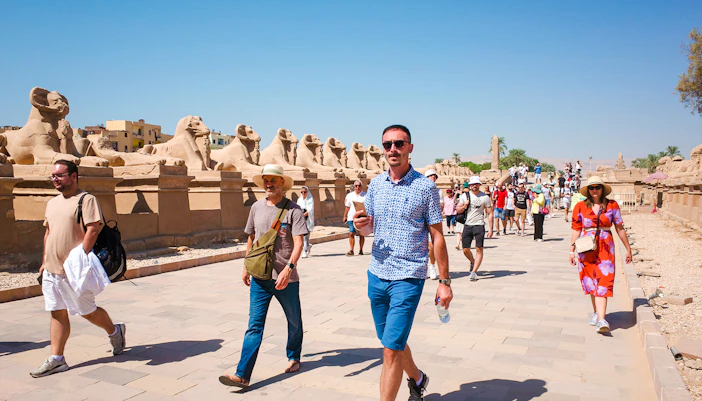
The site sits on Luxor's West Bank, opposite the modern city center, and works best as part of a West Bank morning rather than a midday add-on.

Valley of the Kings, West Bank, Luxor, Egypt

→ Open in Google Maps

  • Private taxi: Main visitor center lot → 0 min walk → Easiest direct drop-off from Luxor hotels or cruise piers.
  • Public ferry + taxi: West Bank ferry pier → about 15 min drive → Usually the lowest-cost DIY route from Luxor's East Bank.
  • Organized tour: Hotel pickup in Luxor → direct transfer → Best if you want entry, guiding, and West Bank stops bundled.
  • Private driver: Visitor center drop-off and wait → flexible return → Useful if you're pairing Hatshepsut or the Valley of the Queens.

Full getting there guide

Which entrance should you use?

There is one main visitor center entrance, but your time can be lost either at the ticket windows or at security. Most people who arrive without a plan end up sorting premium tomb add-ons too late.

  • Pre-booked/skip-the-line tickets: For visitors who already have admission sorted. You still pass security, but you avoid the main ticket-window delay.
  • On-site ticket buyers: For standard entry and premium add-ons bought at the visitor center. Expect the longest waits in winter mornings.
  • Security screening: For all visitors. Expect a brief check before you continue to the tram and tomb zone.

When is Valley of the Kings open?

  • Daily: 6am–5pm
  • May–August: The 6am opening is the most useful slot because outdoor heat climbs fast after sunrise.
  • Last entry: Around 4pm

When is it busiest: November–February, especially 8:30am–12 noon, when winter demand is high and tour buses have reached the valley.

When should you actually go: Aim for 6am–8:30am, when the air is still manageable and you can finish your key tombs before the busiest wave arrives.

The 6am opening changes the visit

If you arrive at 6am, you get the coolest part of the day and a quieter first pass through the best tombs before the late-morning group rush. That matters more here than at most Luxor sites because there is almost no shade between the visitor center and the tomb entrances.

How much time do you need?

Visit typeRouteDurationWalking distanceWhat you get

Highlights only

Visitor Centre → shuttle → 3 selected tombs → exit

1–1.5 hrs

~1 km

A quick look at three tombs covered by the standard ticket. You will have limited time between tombs and may skip additional tombs or spend less time appreciating the wall paintings.

Balanced visit

Visitor Centre → 3 standard tombs → selected additional tomb → exit

2–3 hrs

~1–2 km

More time to explore the tombs at a comfortable pace, with the option to add a premium tomb such as Tutankhamun or Ramesses V/VI.

Full exploration

Visitor Centre → multiple standard tombs → premium tombs → exit

3+ hrs

~2 km+

A deeper exploration for visitors who want to see more of the open tombs. Allow extra time for premium tombs and longer walks, especially in the heat.

Which Valley of the Kings ticket is best for you

Ticket typeWhat's includedBest forPrice range

Skip-the-line entry

Entry to the Valley of the Kings with access to 3 standard tombs open that day; optional upgrades for premium tombs and other sites

Independent travelers who want to explore at their own pace and arrange their own transport or guide

From E£1,120.38

Half-day West Bank tour

Valley of the Kings, Hatshepsut Temple and Colossi of Memnon, with hotel transfers and an Egyptologist guide

First-time visitors who want to cover the main West Bank sights without committing to a full-day tour

From E£1,273.16

Full-day East & West Bank tour

Valley of the Kings, Hatshepsut Temple, Colossi of Memnon, Karnak Temple and Luxor Temple, with guided sightseeing and transfers

Travelers who want to see Luxor's major archaeological sites in one day

From E£1,833.35

Day trip from Hurghada

Round-trip transfers from Hurghada, Valley of the Kings and key East & West Bank sights, with guided sightseeing

Visitors staying in Hurghada who want to see Luxor without arranging transport themselves

From E£4,634.29

Day trip from Cairo

Round-trip flights, transfers, guided sightseeing and visits to the Valley of the Kings, Hatshepsut Temple, Karnak and Colossi of Memnon

Cairo-based travelers who want to visit Luxor without an overnight stay

From E£19,097.36

4-day Nile cruise

3-night cruise from Aswan to Luxor, Valley of the Kings with 3 tombs, temples, Abu Simbel, meals, guided tours and transfers

Travelers who want to combine the Valley of the Kings with a broader Egypt itinerary and Nile cruise

From E£28,009.46

5-day Nile cruise

4-night cruise from Luxor to Aswan, Valley of the Kings with 3 tombs, major temples, Abu Simbel, meals, guided tours and transfers

Travelers looking for a longer, more comprehensive Nile experience starting in Luxor

From E£30,046.52

Ticketing belongs at the visitor center, not outside it

⚠️ Watch out for unofficial sellers. Buy only at the visitor center or through a verified partner — an invalid ticket can still leave you in the longest queue anyway, with no recourse.

How do you get around Valley of the Kings?
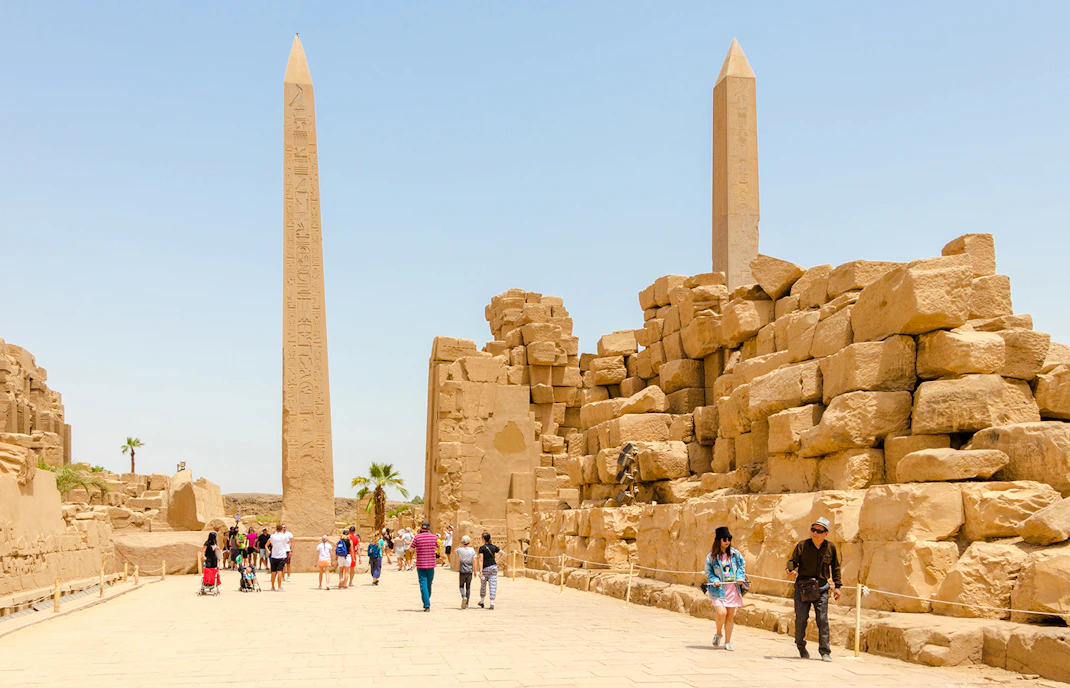
The valley is best explored on foot over 2–3 hours, but the site works in 2 layers: the visitor center below and the tomb loop higher up in the wadi. The main tomb area sits beyond the entrance complex, so the first decision is whether to save energy with the official tram.

Key areas

  • Visitor center: Ticketing, security, and premium tomb decisions happen here before you head uphill.
  • Tuf-Tuf tram drop-off: This is the practical start point for most visits and saves the exposed uphill walk from the gate.
  • Standard tomb loop: Your 3 included tombs come from the day's open roster, so route yourself by quality, not by nearest door.
  • Premium tombs: Tutankhamun, Ramesses VI, and Seti I change the flow because they need separate tickets and are best added deliberately.
  • Exit path: The visit funnels out past souvenir stalls, so keep your pace and don't leave your return transport vague.

Maps and navigation tools

  • Map: A site map or tomb list is most useful for matching KV numbers to names before you enter the tomb area.
  • Signage: Wayfinding is good enough for tomb numbers, but not for deciding which chambers deserve your limited entries.
  • Audio guide/app: If you are self-guiding, a saved note with your top 3 tombs helps more than trying to interpret labels on the spot.
  • Large outdoor POIs only: The valley is compact enough to navigate without GPS, but a guided option is easier if you want help choosing the day's best tombs.

💡 Pro tip: Decide your 3 standard tombs and buy any premium add-ons before you board the tram; they are handled at the visitor center, not at the individual tomb entrances.

What are the most significant spaces in Valley of the Kings?
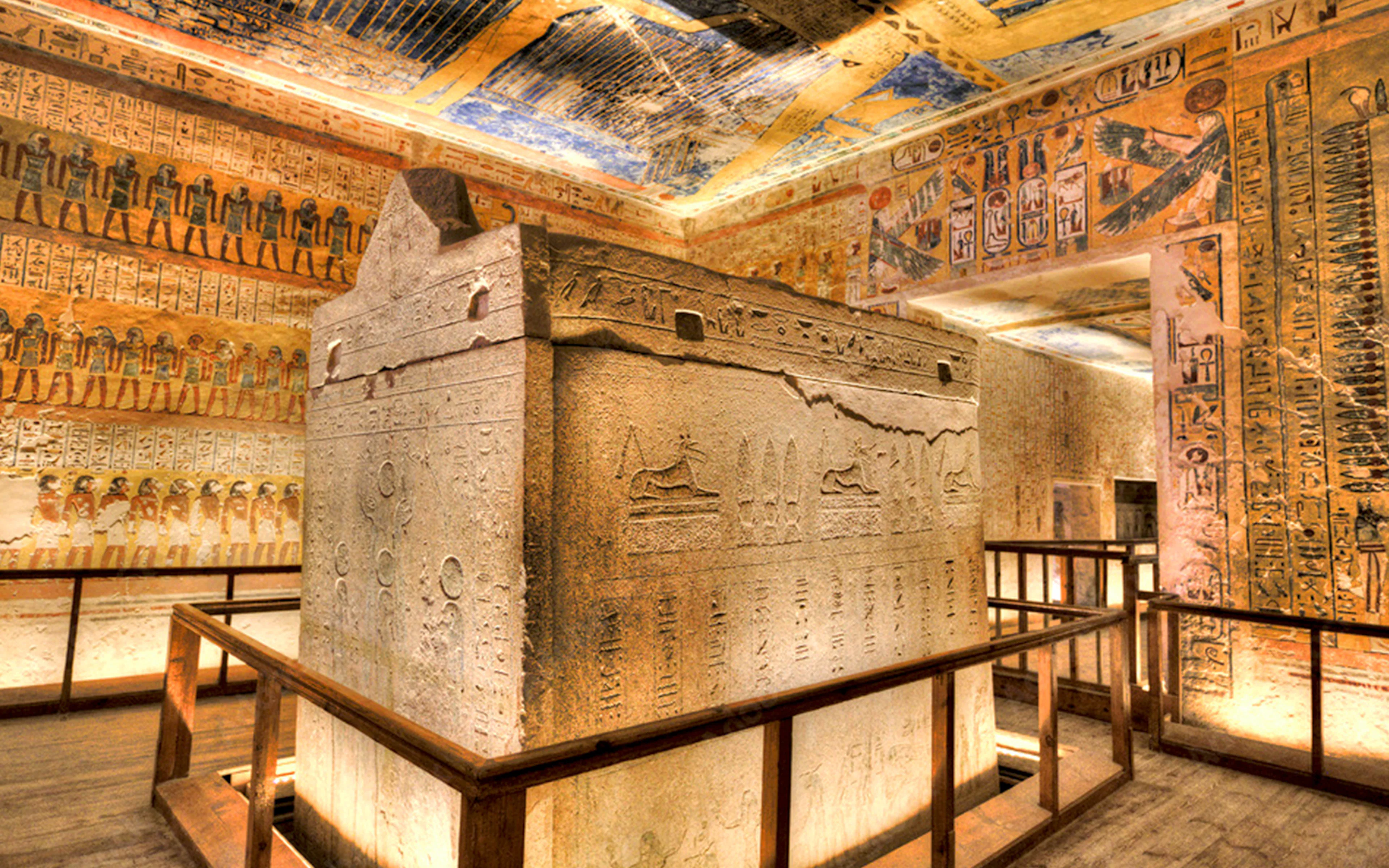
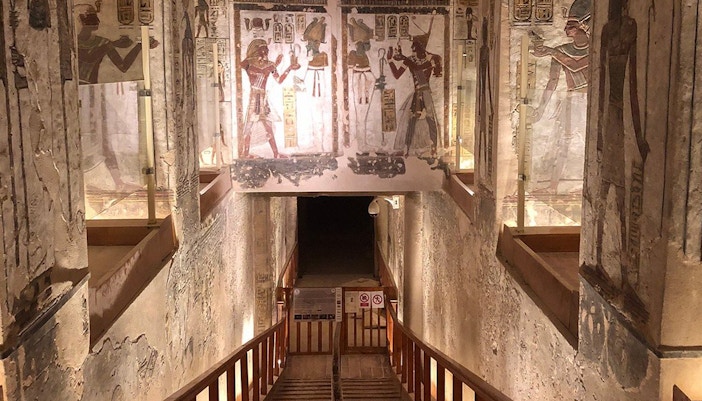
Ramesses IV tomb interior
1/4

Ramesses IV (KV2)

Era: 20th Dynasty

Ramesses IV is one of the smartest first picks because it combines easy access with some of the clearest color preservation in the valley. The sloping entrance is broad, and the burial chamber rewards you with a deep-blue astronomical ceiling and a massive red granite sarcophagus. Most visitors look down the corridor and keep moving, but the ceiling is the detail worth standing still for.

Where to find it: Among the standard tombs when open, identified as KV2 on the daily roster.

Ramesses III (KV11)

Era: 20th Dynasty

Ramesses III is longer and more complex than many neighboring chambers, and it feels like a proper descent into the mountain. It is famous for the unusual side chambers showing musicians, treasuries, and Nile life, which makes it richer than a quick walk-through suggests. Many visitors rush the main corridor and miss the secular scenes that give this tomb its nickname, 'the Harper's Tomb'.

Where to find it: Look for KV11 on the standard open-tomb board at the entrance.

Tutankhamun (KV62)

Era: 18th Dynasty

Tutankhamun's tomb is smaller and less visually overwhelming than the big Ramesside tombs, so it is best chosen for historical significance, not sheer spectacle. What makes it special is the direct encounter with the original burial chamber and Tutankhamun's mummy, still on site in a climate-controlled case. Many first-timers expect a treasure-filled room, but the real value is the rare sense of being in the actual tomb that changed modern archaeology.

Where to find it: Premium tomb, signed as KV62, with separate paid access.

Seti I (KV17)

Era: 19th Dynasty

Seti I is the valley's artistic high point and the splurge pick if this is your one major tomb visit in Luxor. It runs deep into the rock, and the carved reliefs are denser and more refined than what you see in standard chambers. Most visitors know it is expensive, but what they miss is how complete the visual program feels from corridor to burial hall.

Where to find it: Premium tomb, signed as KV17, with a separate high-tier supplemental ticket.

Facilities and accessibility

  • 🎟 Visitor center: This is where you sort entry, premium tomb add-ons, and your route before you move into the valley.
  • 🚋 Electric Tuf-Tuf tram: A round-trip tram links the visitor center to the tomb area and is the easiest way to save energy before you start walking underground.
  • 🛍️ Souvenir stalls: The exit flow passes through a souvenir area, so browsing usually happens after the tomb visit rather than before it.
  • 🪑 Rest pacing: There is far less comfort above ground than inside the tombs, so plan short pauses in the shade of entrances rather than long stops in the open.
  • 💧 Tour water: Many guided West Bank tours include bottled water, which matters because the exposed approach is hotter than the time you spend underground.
  • Mobility: The main connecting paths are paved and the tram can handle folding wheelchairs, but the tomb interiors themselves involve long ramps and occasional steps, so the site is only partially accessible.
  • 🧠 Cognitive and sensory needs: The quietest and least pressured window is the 6am opening, while late morning is louder, hotter, and busier once large groups arrive.
  • 👨‍👩‍👧 Families and strollers: The surface route is easier than the tomb interiors, where slopes and narrower passages make strollers impractical.
  • 🏞️ Terrain: Above ground, expect sun, paved paths, and an exposed uphill approach from the visitor center if you skip the tram.
  • ⚠️ Reality check: Several Headout tours note that the experience is not wheelchair accessible, which reflects the limits inside the tombs rather than the main outdoor path.

Children can enjoy the valley if they are curious about ancient Egypt, but the experience is better for school-age visitors than for children who need play space or long breaks.

  • 🕐 Time: Around 1.5 to 2 hours is realistic with younger children if you focus on a few strong tombs instead of trying to see everything.
  • 🏠 Facilities: The tram is the family helper here because it cuts down the exposed uphill approach before the underground walking starts.
  • 💡 Engagement: Pick 1 tomb with dramatic color, such as Ramesses IV, and 1 famous name, such as Tutankhamun, to keep the visit concrete.
  • 🎒 Logistics: Bring water, a sun hat, and sturdy shoes, and aim for the 6am opening before the site gets hotter and more tiring.
  • 📍 After your visit: The Temple of Hatshepsut pairs well afterward because it is close enough to keep the West Bank day efficient.

Rules and restrictions

What you need to know before you go
  • Entry requirement: Standard admission covers 3 standard tombs open that day, while premium tombs like Tutankhamun, Ramesses VI, and Seti I require separate paid add-ons.
  • Booking method: If you use a timed skip-the-line ticket, arrive at least 10 minutes early so you can clear security without eating into your tomb time.
  • ID: Non-Egyptians may be asked for a passport copy, while local visitors may need a valid photo ID depending on ticket type.
  • Bag policy: Large luggage and oversized bags are not allowed, so keep what you bring down to a small day bag.
  • Visit flow: Buy any premium tomb access before leaving the visitor center, because the tomb entrances themselves do not handle ticket upgrades.

Not allowed

  • 🚫 Food and drink: Full meals and loose food are best left for before or after the site, and many tours allow only bottled water in transit.
  • 🚬 Smoking and vaping: Smoking is not permitted inside the tomb areas or tour vehicles, and any designated smoking stop is typically outside the visit flow.
  • 🐾 Pets: Pets are not permitted, except for registered service animals where allowed under the booked experience terms.
  • 🖐️ Touching and climbing: Do not touch painted walls or climb barriers, because the tomb interiors are conservation-sensitive and damage is cumulative.
  • 🚫 Dangerous items: Bottles used as prohibited objects, fireworks, laser pointers, and similar items are not allowed through security.

Photography

  • Phone photography without flash is generally allowed inside the tombs, which is enough for most visitors.
  • Flash is banned throughout the chambers because it damages ancient pigments, and professional cameras, tripods, and filming equipment may require a separate permit or face added restrictions.
  • If a rule changes tomb by tomb, follow the sign at that entrance rather than assuming the last chamber had the same policy.

Good to know

  • Guiding rule: Guides are not allowed to lecture inside the tombs, so the real explanation happens outside before you walk in.
  • Daily variation: The open list of standard tombs rotates for conservation, so your best 3 choices can change from one day to the next.
Once you leave the ticketed site, your visit is effectively over

⚠️ Re-entry is not permitted once you exit Valley of the Kings. Plan premium tomb choices, restroom stops, and water before you head back toward the visitor center, because the tomb loop sits uphill and the visit flow is designed as a one-way outing.

Practical tips

  • Booking and arrival: In winter, book a few days ahead if you want the first morning slot, because that is when the site is coolest and the ticket-window savings matter most.
  • Pacing: Save your attention for 1 or 2 major tombs rather than trying to rush all 3 included chambers at the same speed; Ramesses IV and Ramesses III usually reward a slower look.
  • Crowd management: The single best move is arriving at 6am, because by about 8:30am the valley starts filling with organized groups from Luxor, Nile cruises, and the Red Sea coast.
  • What to bring or leave behind: Bring a small bag, water, sunglasses, sunscreen, and closed-toe shoes, and leave bulky luggage behind because it is not allowed and only slows security.
  • Premium tomb strategy: Decide before arrival whether you care more about historical fame or visual impact — Tutankhamun for the mummy, Ramesses VI for the ceiling, Seti I for the full artistic masterpiece.
  • Transport planning: If you are visiting independently, sort your return taxi or driver before you enter so you are not negotiating in the heat after the souvenir-lined exit.
  • Food and drink: Eat before you cross to the West Bank or plan lunch after Hatshepsut, because the valley itself is best treated as a focused morning site rather than a lingering stop.

What else is worth visiting nearby?

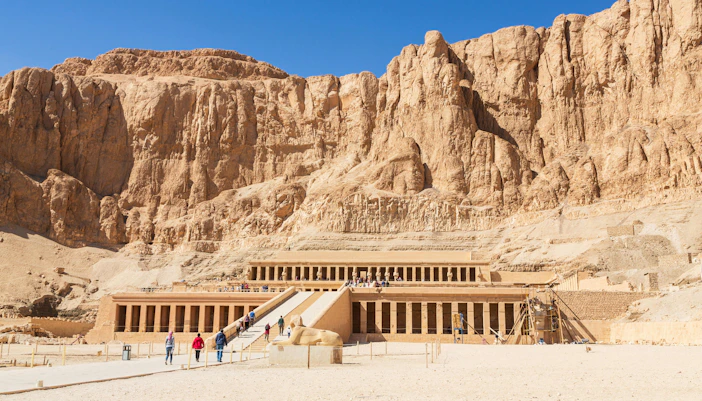
Commonly paired: Temple of Hatshepsut
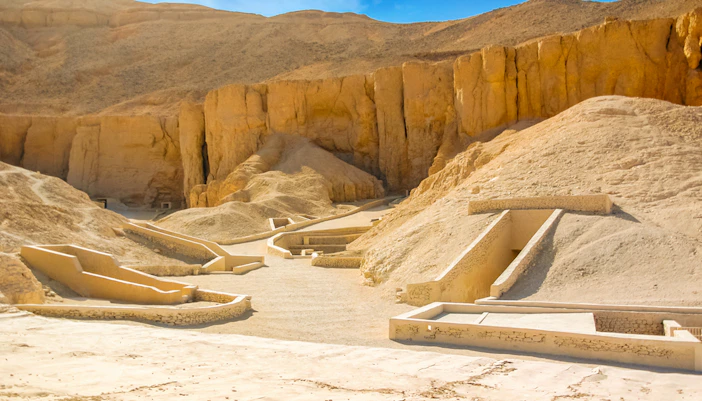
Distance: 6 km — about 10–15 min by road

Why people combine them: It is the most natural same-morning pairing on Luxor's West Bank, and nearly every half-day route connects the royal tombs with Hatshepsut's terraces and a Colossi of Memnon stop.

Book/Learn more

✨ Valley of the Kings and the Temple of Hatshepsut are most commonly visited together and are simplest to do on a combined West Bank tour. A bundled half-day option keeps transport, pacing, and entry logistics in one plan.

→ See combo options

Commonly paired: Valley of the Queens
Distance: about 4 km — around 10 min by road

Why people combine them: It extends the same necropolis story with royal family burials, and it makes sense if you want another tomb-focused site rather than a temple after your first visit.

Also nearby

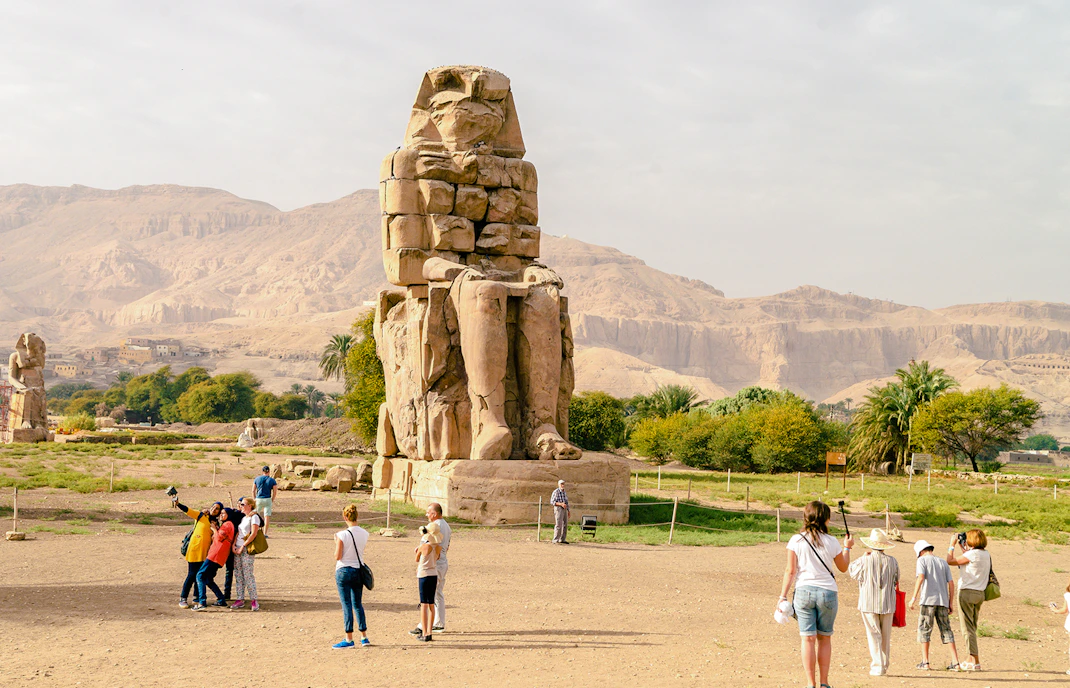
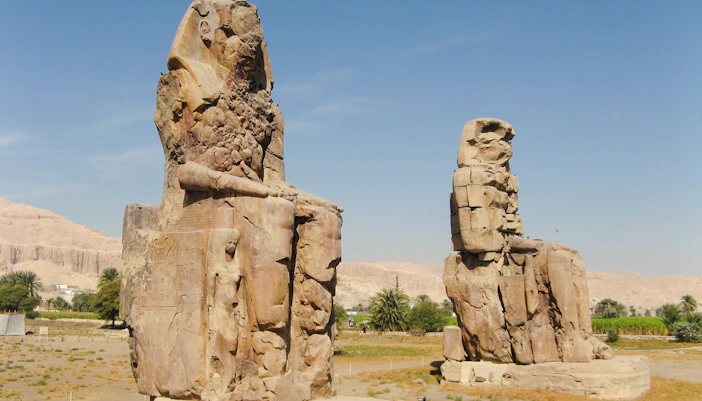
Colossi of Memnon

Distance: about 8 km — around 15 min by road

Worth knowing: This is usually a quick photo stop rather than a long standalone visit, but it fits neatly on the return from the deeper West Bank sites.

Tombs of the Nobles

Distance: about 7 km — around 15 min by road

Worth knowing: If the royal iconography starts to blur together, these tombs offer a more everyday view of ancient Egyptian life, work, and status.

Eat, shop and stay near Valley of the Kings

  • On-site: Don't plan a full meal around the tomb area itself; treat the valley as a focused morning visit and eat before you cross the Nile or after your next West Bank stop.
  • Lunch on guided tours: Many half-day and full-day Headout West Bank options include lunch, which removes the awkward midday search when the heat is strongest.
  • West Bank ferry area cafés: Best as a simple drink or quick bite before or after sightseeing, especially if you are traveling independently by ferry and taxi.
  • Luxor East Bank hotel restaurants: More useful for a proper sit-down meal after your return, with better evening choice than the archaeological zone.
  • 💡 Pro tip: If you are doing the valley and Hatshepsut in one stretch, eat afterward rather than in between — stopping in the middle breaks your cool morning window and puts more of the visit into the heat.
  • Exit bazaar at the visitor center: This is the easiest place to pick up a quick souvenir, but it is also the most pressured part of the shopping experience.
  • West Bank alabaster workshops: Many drivers and organized tours stop at craft shops on the return route, which gives you more space to browse than the immediate exit market.

The valley itself is not a hotel district. It is a daytime archaeological zone, and most travelers are better off sleeping on Luxor's East Bank, where hotel choice, evening transport, and dining are easier. A West Bank base can work if you want dawn access to tombs and temples, but it is more about quiet than convenience.

  • Price point: East Bank accommodation gives you the widest range, while West Bank stays tend to feel more niche and logistics-heavy.
  • Best for: A West Bank stay suits travelers who want early starts and a slower local feel more than nightlife or easy evening movement.
  • Consider instead: Stay on Luxor's East Bank for a short trip, or split your time with a Nile cruise if you want West Bank access without arranging every transfer yourself.

Frequently asked questions about visiting Valley of the Kings

Most visits take 2 to 3 hours. That usually covers security, the approach to the tomb zone, 3 standard tombs, and a little time to slow down inside the best chambers. If you add Tutankhamun, Ramesses VI, or a guided West Bank route with Hatshepsut, plan for the longer end.