Is the Valley of the Kings worth visiting?

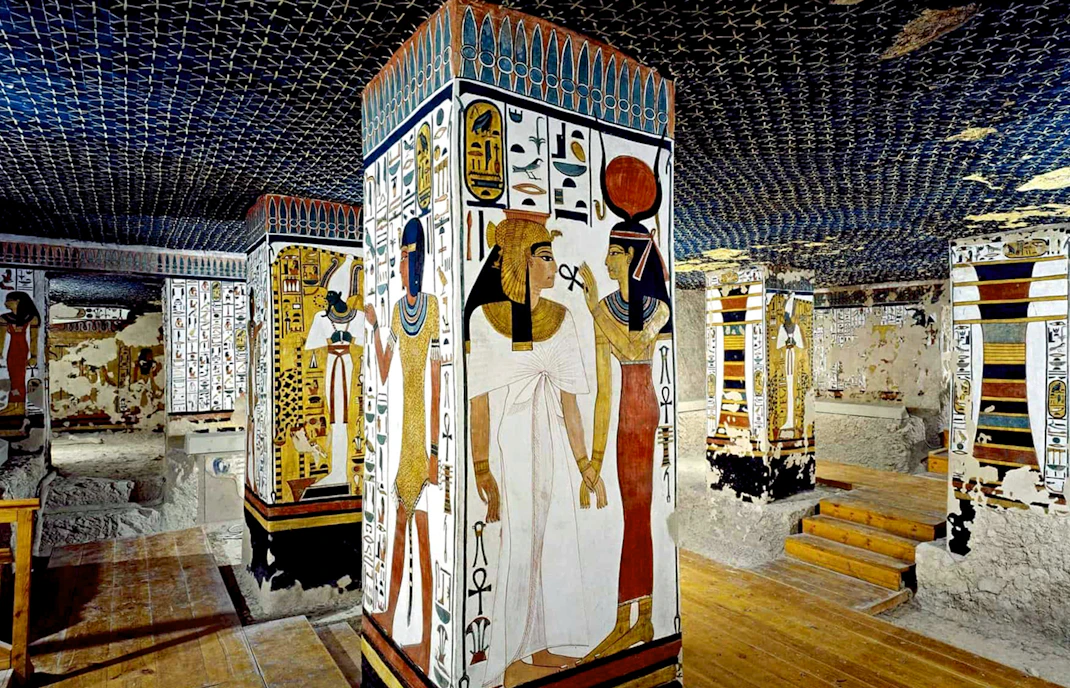
You step out into a pale, blinding wadi, then down into a tomb where the temperature drops, voices fade, and painted gods begin to glow under low light. The contrast is the experience: raw desert above, carved silence below.

This valley was created for concealment as much as ceremony. New Kingdom pharaohs abandoned exposed pyramids and cut their graves into the Theban cliffs, turning the landscape itself into a hidden machine for burial, protection, and eternity.

What stays with most visitors is the sense of proximity. You are not looking at fragments behind glass; you are walking the same sloping corridors priests once used, with 3,000-year-old color still clinging to the walls. Few places in Luxor make ancient Egypt feel this physically close.

Skip it if: steep ramps, enclosed chambers, and dry desert heat wear you down quickly.

What to see inside the Valley of the Kings?

Open tomb board at Valley of the Kings
Al-Qurn above the Valley of the Kings
Painted corridor in Ramesses IV tomb
Side chambers in Ramesses III tomb
Tutankhamun tomb chamber in Valley of the Kings
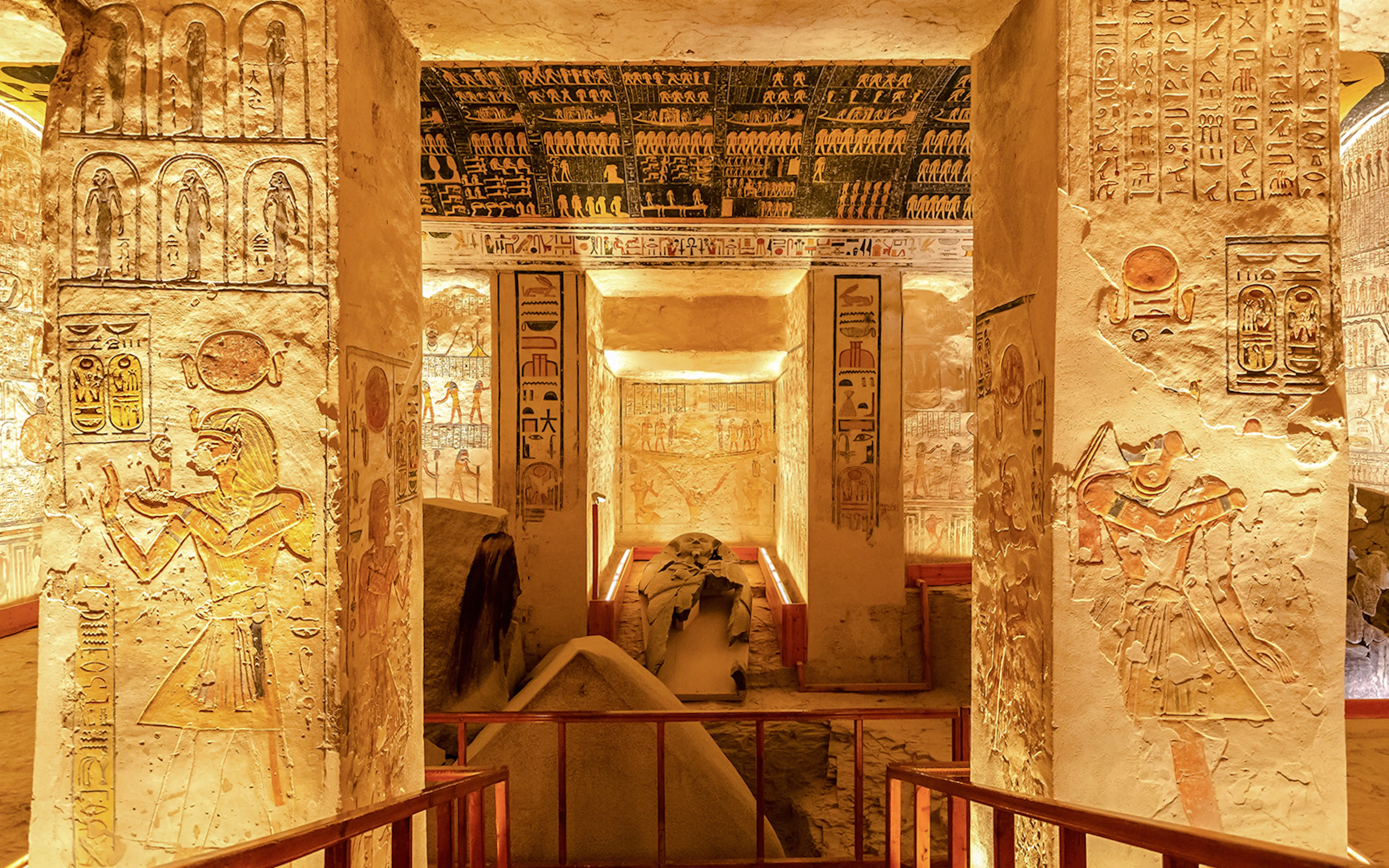
Star-painted ceiling in Ramesses VI tomb
Reliefs inside Seti I tomb
1/7

The daily open-tomb board

The roster near the entrance tells you which standard tombs are open that day. Read it before heading up; your ticket covers 3 standard tombs, and the strongest combination changes regularly for conservation.

Al-Qurn and the valley floor

The pyramid-shaped peak above the wadi explains why this site feels deliberately chosen. Even before you enter a tomb, the limestone bowl makes the necropolis feel hidden, ceremonial, and cut off from the Nile plain.

Tomb of Ramesses IV (KV2)

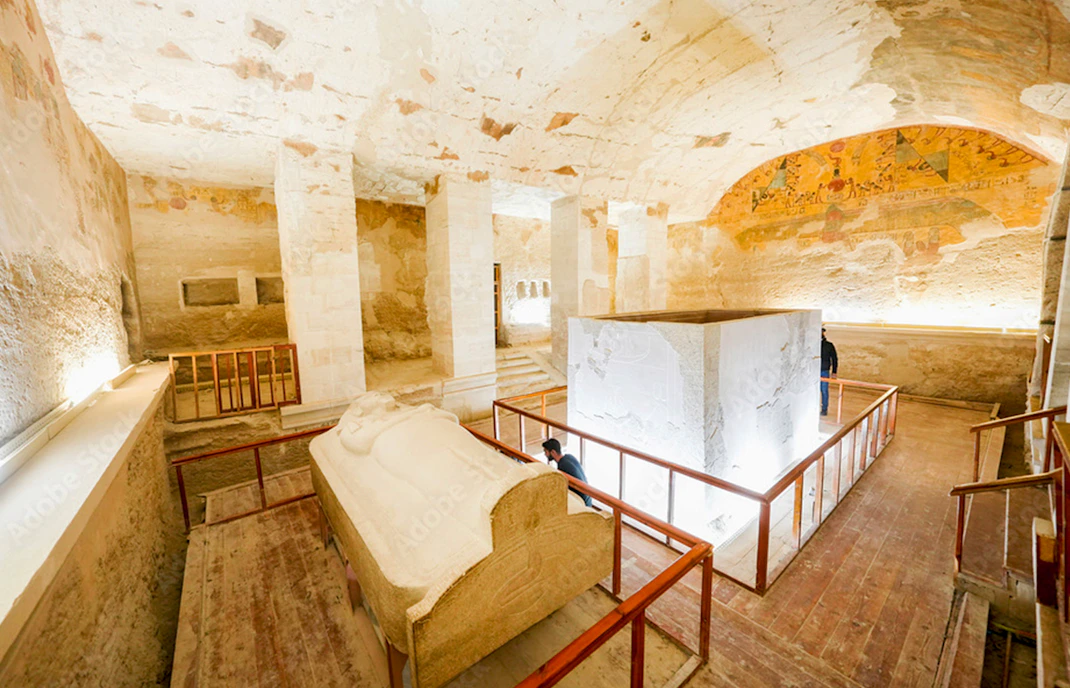
One of the easiest tombs to appreciate on a first visit: a broad descending corridor, vivid wall color, and a burial chamber with a massive red granite sarcophagus beneath a dark blue astronomical ceiling.

Tomb of Ramesses III (KV11)

Long, complex, and unusually varied, this tomb is known for side chambers with secular scenes, including musicians and storerooms. If it is open, budget extra time; visitors tend to linger here longer than expected.

Tomb of Tutankhamun (KV62)

Small compared with neighboring tombs, but historically unmatched. This requires a separate ticket, and the draw is clear: you can see Tutankhamun’s mummy in the tomb where it was found.

Tomb of Ramesses VI (KV9)

Worth the supplemental ticket for visitors who care about painted ceilings. The burial chamber is filled with star imagery and underworld texts, and the scale of the decoration feels more immersive than photographs suggest.

Tomb of Seti I (KV17)

The valley’s artistic high point, reached with a premium ticket. Its raised reliefs, long axis, and refined carving make it the tomb serious Egypt enthusiasts talk about most, but access is tightly controlled.

How to explore the Valley of the Kings

Budget 2–3 hours if you are visiting 3 standard tombs and taking the tram up from the visitor center. Allow closer to 3.5 hours if you are adding Tutankhamun or Ramesses VI, because premium-tomb lines move more slowly and the heat drains energy fast after mid-morning.

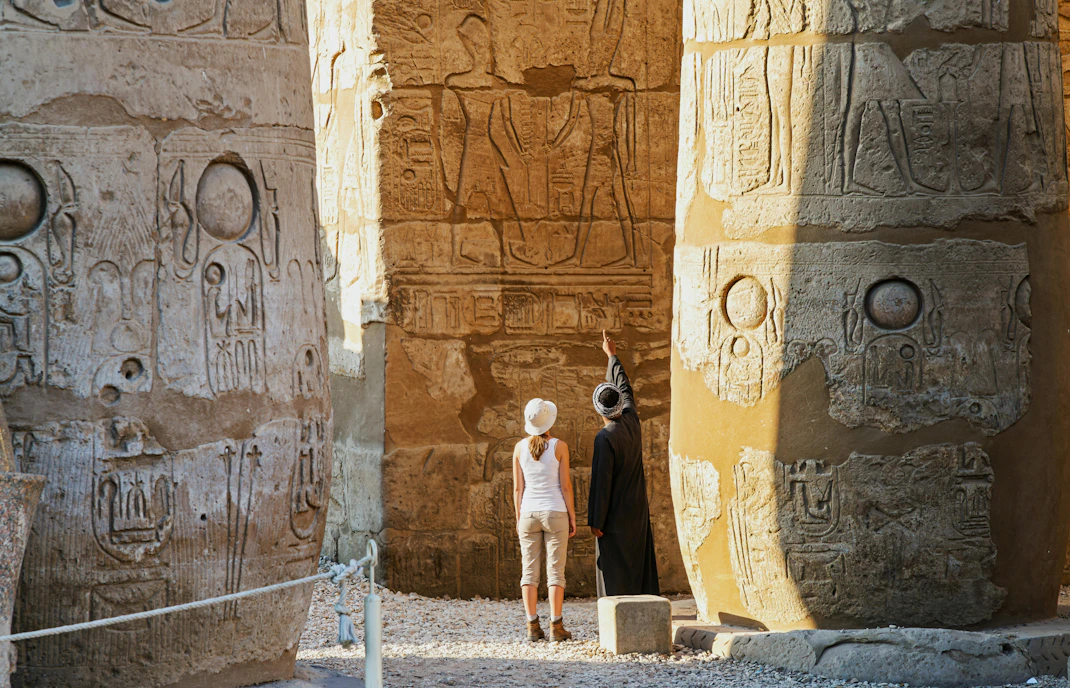
Start as close to opening as you can. Buy any premium add-on tickets before you leave the visitor center, then take the tram and head first to the most in-demand tomb on your list while the corridors are still cool and quiet. After that, work through 2 nearby standard tombs before cruise excursions and Red Sea day trips fully arrive. Must-see: at least 1 long painted royal tomb such as Ramesses III or Ramesses IV, plus the valley setting beneath Al-Qurn. Optional: Tutankhamun’s tomb for the historic pull of seeing his mummy, or Ramesses VI for its painted ceiling; each adds around 20–30 minutes. Guided vs. self-paced: a guide adds real value here because speaking is restricted inside the tombs, so the best guides brief you outside and tell you exactly what symbols and burial texts to look for once you enter.
Brief history of the Valley of the Kings

  • 16th century BCE: Early 18th Dynasty rulers shift royal burial from visible pyramid fields to this hidden wadi on the west bank of Thebes.
  • Reign of Thutmose I: The first royal tomb is likely cut here, establishing the valley as the New Kingdom’s main royal necropolis.
  • 18th–20th Dynasties: More than 60 tombs are excavated for pharaohs, queens, and elite royals, including Tutankhamun, Seti I, and Ramesses VI.
  • 11th century BCE: Royal burial in the valley ends as political fragmentation and tomb robbery intensify across Upper Egypt.
  • 1922: Howard Carter discovers the largely intact tomb of Tutankhamun, turning the valley into one of archaeology’s defining sites.
  • 1979: Ancient Thebes with its Necropolis, including the Valley of the Kings, is inscribed as a UNESCO World Heritage Site.
  • Today: Tombs open on a rotating basis to reduce humidity and protect painted walls from overuse.

Who built it?

The Valley of the Kings was created under the patronage of New Kingdom pharaohs, probably beginning with Thutmose I, and executed by royal architects, quarrymen, and painters from communities such as Deir el-Medina. The shift was strategic: hide royal burials inside cliffs, not beneath exposed pyramids that advertised wealth to robbers.

Architecture of the Valley of the Kings

Style

Rock-cut funerary architecture. Nothing announces itself from the outside; the drama is in the descent, where sloping ramps pull you from desert glare into painted ritual space.

Material

The tombs are cut into Theban limestone, then coated with plaster that held mineral pigments in strong yellows, blues, reds, and blacks.

Engineering

Builders drove long corridors deep into the hills, sometimes shifting direction to avoid faults or older chambers, as you can see in Ramesses III’s tomb.

Experience

The contrast is the point — heat, brightness, and open sky above, then cool silence, low light, and ceilings crowded with gods and stars below.

Why the tomb list changes

The Valley of the Kings is not a place you ‘complete’ in 1 visit because the open-tomb roster changes regularly. Conservators rotate access to limit humidity, carbon dioxide, and wear inside the painted chambers, especially in the most delicate tombs. That means today’s best standard-ticket combination may not be the same next month. It can be frustrating if you arrive with a fixed checklist, but it is also why the colors still read so clearly on many walls.

Frequently asked questions about the Valley of the Kings

Yes, especially if you want to walk inside royal tombs rather than see objects in a museum case. Book Valley of The Kings Skip-the-Line Tickets if you want a faster start and the freedom to choose your tombs on arrival.